

THE SHORT ANSWER
Where should a beginner start learning freight brokerage?
Learn the whole shipment process, then practice explaining each decision. Knowing sales language alone does not prepare you to manage freight.
Watch the original lesson.
Can You Become A Freight Broker With No Experience? ↗
Freightskills · Luis Uribe. This lesson reflects its original recording period.
Start with the work, not the title
Luis compares beginners with people who already have industry habits. Prior experience can provide context, while a newcomer may be more open to learning a defined process. Neither background removes the need to understand the work.
Decide what role you are preparing for. Brokerage ownership includes business and administrative responsibilities that may be handled differently in an agent arrangement. Learn what you will personally be expected to do.
Follow a shipment from prospect to payment
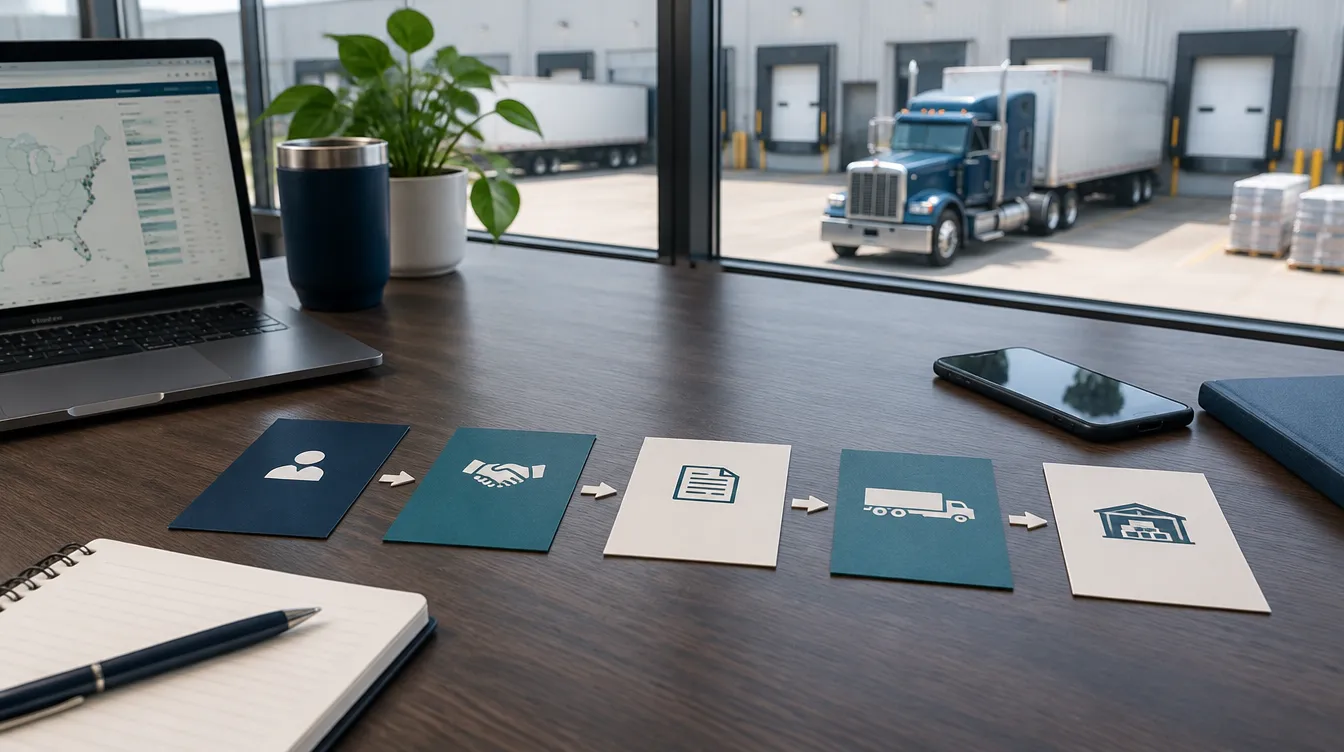
A useful learning sequence begins with identifying a suitable shipper and understanding its freight. Continue through gathering shipment details, developing a quote, selecting a carrier and documenting the movement.
Then study pickup, status updates, exceptions, delivery paperwork and billing. This sequence reveals how an incomplete question during sales can become an operations or payment problem later.
Learn to explain the reasons behind each step
Memorizing a script is less useful if you cannot recognize when the shipment does not fit it. Ask why a carrier needs a particular detail, why a facility requires an appointment and why an invoice needs supporting documents.
Use the lessons to build your vocabulary while keeping the operational meaning attached. The objective is to understand a decision well enough to ask a sensible follow-up question, not to sound experienced by repeating terms.
Match training to the freight you plan to handle
Experience in one area does not automatically establish expertise in every mode. Luis highlights the importance of relevant operational knowledge when evaluating an instructor or source.
Someone learning container drayage needs to understand a different set of handoffs from someone studying ordinary truckload movements. Review whether the material explains the actual mode, documents and constraints you expect to encounter.
Evaluate the substance and support
Free lessons, structured instruction and supervised work can each contribute to learning. Look for specific explanations, realistic limitations and a clear account of any support offered.
Do not infer a current program’s price, scope or deliverables from an older promotional video. This library provides educational material; it does not announce a finalized paid offer or guarantee employment, customers or income.
Build a foundation before adding complexity
Begin with prospect research, quoting, carrier qualification and shipment management. Then explore LTL, drayage and business responsibilities in more depth. Revisit earlier lessons as the connections become clearer.
The practical test is whether you can identify what information is missing and who can reliably supply it. That habit is more durable than treating one script, tool or credential as a substitute for learning the process.